Why Does My Lower Back Hurt? 10 Most Common Causes and When To Seek Therapy
Lower back pain can be incredibly debilitating. It’s painful, unsettling, and often gets in the way of your ability to complete daily tasks–which is the last thing you want to deal with on a busy work day or when you’re simply trying to relax at home.
So, if you’ve been consistently struggling with this issue, we’re going to outline some of the most likely reasons why. From here, we’ll also provide some recommendations on when it’s time to seek out back related treatments and therapy.
What is Lower Back Pain?
Lower back pain specifically refers to discomfort or pain in the lumbar region (Source: Health Direct), which is the area of your back below your ribs and above your hips. This part of the spine supports much of your body weight and allows you to bend, twist, lift, and move freely .
In this area, pain can originate from muscles, ligaments, joints, discs, or nerves. In some cases, there’s no single clear cause. This is typically known as non-specific low back pain, and it accounts for most cases.
Although lower back pain might not seem serious, it can still affect your mobility, sleep, mood, and ability to work or exercise.
10 Possible Causes Behind Your Lower Back Pain
According to figures released in 2022, approximately 4 million, of 16% of the Australian population “were estimated to be living with back problems” (Source: AIHW). Exercise Right Australia also estimates that 4 out of every 5 Australians will experience back pain at some point throughout their life.
So, if this issue is currently affecting you, these figures illustrate that you’re certainly not alone. With this in mind, let’s begin to explore some of the more common causes why you may be experiencing lower back pain, and outline why osteopathy could be a viable pathway forward.
1. Muscle or Ligament Strain
Muscle or ligament strain is one of the most common causes of lower back pain. It often occurs after sudden movements, lifting heavy objects incorrectly, twisting awkwardly, or overdoing physical activity. Even everyday tasks (such as moving furniture, gardening, or picking up children) can trigger a strain if the body isn’t supported properly.
Symptoms may include stiffness, localised pain, reduced flexibility, and muscle spasms. While strains often improve within a few days or weeks, repeated strain or poor movement habits can lead to recurring discomfort if not addressed.
2. Poor Posture and Prolonged Sitting
Spending long hours sitting at a desk, slouching on the couch, or working on laptops without proper ergonomic support can gradually overload the lower back. Poor posture places uneven pressure on spinal structures, leading to muscle fatigue, joint stress, and postural imbalances over time.
This is particularly relevant for office workers and people working from home, where prolonged sitting and limited movement can contribute to stiffness and ongoing back pain. Without posture correction and regular movement, minor discomfort can slowly develop into persistent pain.
3. Herniated or Bulging Discs
The discs between your spinal vertebrae act as cushions that absorb shock and allow flexibility. When a disc bulges or herniates, it can irritate nearby nerves (sometimes causing sharp lower back pain or pain that radiates down the leg (commonly referred to as sciatica). In fact, many high-profile professional athletes have suffered from this exact issue, including tennis player Andy Murray and basketballer Ben Simmons.
Disc issues can result from wear and tear, improper lifting, prolonged sitting, or trauma. Pain may worsen when sitting, bending forward, or coughing. While many disc injuries heal with conservative care, they can require professional treatment if symptoms persist.
4. Joint or Facet Joint Dysfunction
Facet joints are small joints in the spine that allow controlled movement. When these joints become irritated, inflamed, or restricted, they can cause localised lower back pain.
This type of pain is commonly aggravated by twisting, arching backwards, or prolonged standing. People may notice stiffness in the morning or pain that worsens throughout the day. Targeted therapy can help restore joint mobility and reduce inflammation.
5. Degenerative Changes and Osteoarthritis
As we age, natural wear and tear can affect spinal discs and joints. Conditions such as osteoarthritis or degenerative disc disease can lead to chronic lower back pain, stiffness, and reduced mobility.
This type of pain often develops gradually rather than suddenly and may feel worse after periods of inactivity or in colder weather. While degenerative changes are common, appropriate exercise, mobility work, and physiotherapy can significantly improve comfort and function.
6. Weak Core and Back Muscles
Your core and lower back muscles play a critical role in supporting the spine. If these muscles are weak or underactive, the spine may take on more load than it should, increasing the risk of strain, fatigue, and ongoing pain.
Weak core stability is often linked to sedentary lifestyles, limited exercise, or improper training techniques. Strengthening the abdominal, gluteal, and back muscles can help stabilise the spine and reduce the likelihood of recurring pain episodes.
7. Heavy Lifting or Repetitive Movements
Jobs or activities that involve repetitive bending, twisting, or lifting such as trades, warehousing, nursing, or childcare place consistent stress on the lower back. Even recreational activities like weightlifting or DIY projects can contribute if proper technique isn’t used.
Over time, repeated strain can irritate muscles, joints, and discs, leading to persistent pain or acute flare-ups. Learning correct lifting mechanics and improving strength and mobility can help reduce strain on the lower back.
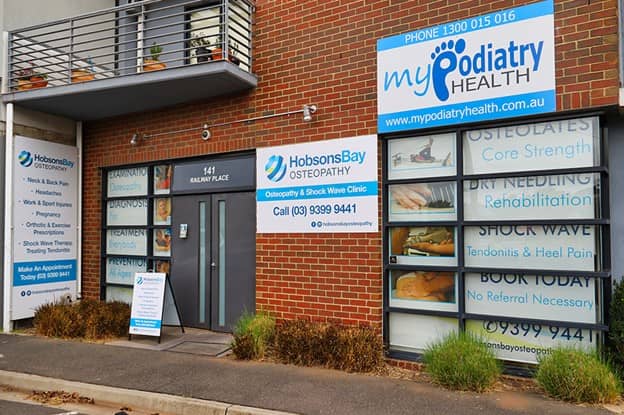
Feeling the strain? Dealing with persistent pain? At Hobsons Bay Osteopathy, we offer a range of options for back pain therapy in Williamstown. We’re located at 141 Railway Place, Williamstown, VIC 3016, and open 6 days a week from Monday to Saturday.
8. Sedentary Lifestyle or Lack of Exercise
Too little movement can be just as harmful as overexertion. A sedentary lifestyle weakens supportive muscles, reduces spinal flexibility, and limits blood flow to spinal tissues making the lower back more vulnerable to stiffness and injury.
People who sit for long periods without regular movement breaks often develop tight hip flexors, weak glutes, and reduced mobility, all of which can contribute to back pain. Regular low-impact activity such as walking, stretching, or strengthening exercises can help maintain spinal health.
9. Stress, Anxiety, and Muscle Tension
Stress doesn’t directly damage the spine, but it can significantly influence how pain is felt and processed. Emotional strain often leads to increased muscle tension especially in the back and shoulders which can worsen existing discomfort or contribute to new pain.
People under chronic stress may also be more sensitive to pain, less active, and more prone to poor posture. Addressing stress through movement, relaxation techniques, and professional support can play an important role in managing lower back pain.
10. Underlying Medical Conditions (Less Common)
As noted on the Health Direct website, “more than 9 out of 10 cases of back pain are not caused by a serious medical problem.” However, for one out of 10 Australians that do suffer back pain, underlying medical issues could be the driving factor.
Although most lower back pain is mechanical or lifestyle-related, some cases may be linked to underlying medical conditions. These can include spinal infections, inflammatory arthritis, fractures, scoliosis, osteoporosis, or, rarely, more serious conditions such as tumours.
Red flags may include unexplained weight loss, fever, severe night pain, or pain following trauma. If back pain appears without a clear cause or is accompanied by unusual symptoms, medical assessment is essential to rule out more serious issues.
Understanding the Role of Osteopathy for Back Pain
Osteopathy can be an effective aid to both the treatment and recovery of issues related to back and spinal pain. Often, they are used to complement standard medical care, as well as helping to reduce reliance on prescription medication.
Osteopaths are focused on back and spinal pain, including issues in the lumbar region.
> Sharp, acute, burning, shooting, radiating, throbbing pain – with or without pins and needles, numbness or weakness
> Dull, uncomfortable, aching, chronic pain
> Tight, stiff, locked up aches and pain
> Sharp or uncomfortable pain with movement
> Sciatica, slipped disc, disc bulges, herniated disc, arthritis, spinal degeneration, spinal joint sprain, muscle spasm and muscle tears are conditions typically treated
Hobsons Bay: Your Local Osteopathy Clinic in Williamstown
Whether you’re seeking back pain therapy in Footscray or looking for an osteopath in Newport, we’re a local clinic that’s proud to serve our local community. We’re open 6 days a week, with free parking, wheelchair access, and close proximity to public transport.
Here’s a look into what we offer:
A Family Clinic: Care for patients of all ages, with treatments adapted to different life stages, activity levels, and musculoskeletal needs.
Experience: Consistent, high-quality care guided by Dr Mike Stowe’s clinical experience and mentorship.
Professional Practitioners: Registered, insured osteopaths committed to ongoing professional development.
Friendly and Professional: Approachable practitioners supported by helpful, responsive reception staff.
Diversity: Access to multiple practitioners with varied expertise to suit individual needs and schedules.
Comprehensive Treatment Options: Dry needling, exercise therapy, core strengthening, shockwave therapy, and specialist referrals when needed.
Reliability: Flexible appointment options, waiting lists, and reminder texts to minimise missed sessions.
Sensitivity: A safe, respectful, and comfortable environment for all patients, including children and pregnant women.
Appendix
What Is Osteopathy?
Osteopathy is a form of manual therapy focusing on the intricate relationship between the structure of the body and the way it functions.
It places a strong emphasis on how the skeleton, joints, muscles, nerves, circulation, connective tissue, and internal organs work together as a holistic unit. Applying an understanding of this connection, osteopaths aim to support the body’s natural ability to heal, move, and function.
About Osteopaths
Osteopaths are government-registered healthcare practitioners who complete a minimum of five years of university training.
Their studies cover anatomy, physiology, pathology, general medical diagnosis, and osteopathic techniques. As primary healthcare professionals, an osteopath is trained to identify conditions that may require medical referral. In addition, they are able to perform comprehensive examinations of the musculoskeletal, cardiovascular, respiratory, and nervous systems.
Applying skilled assessments, diagnosis, and hands-on techniques, osteopaths can identify dysfunctions in the body, as well as support its natural healing processes.
The majority of osteopathic treatments are covered by both private health funds and Medicare’s Enhanced Primary Care (EPC) Plans. Osteopaths are also registered providers for DVA patients, recognised by workers’ compensation schemes, and motor accident insurers.
Who Can Benefit from Osteopathy?
Osteopathy is suitable for people of all ages and lifestyles.
This includes
> Newborns
> Children
> Teenagers
> Pregnant women
> Adults
> Elderly
It also caters to a wide range of professions and activity levels, from athletes and tradespeople to hospitality staff, retail staff, office workers, nurses, and various other professions. Anyone seeking to improve movement, reduce pain, or maintain overall wellbeing can benefit from osteopathy.

 Free Parking Available
 Wheelchair Access
 Close to Public Transport